


The most critical features to prioritize when selecting a reclining sectional sofa are a robust reclining mechanism (manual or power) rated for at least 15,000–25,000 cycles, high-density foam cushioning (≥1.8 lb/ft³), kiln-dried hardwood frame with reinforced corners, durable upholstery (double rub count ≥30,000 for fabric), and independent recline zones for each seat. Equally essential are wall-hugger technology for tight spaces and adjustable headrests/lumbar support. Start with these non‑negotiables to ensure long‑lasting comfort and reliability.
1. Reclining Mechanism: Smoothness & Build Quality
The reclining mechanism is the heart of any reclining sectional sofa. A poorly engineered mechanism leads to jerky motion, noise, or premature failure. Look for all‑steel linkage systems with at least 2 mm thickness, tested to 25,000 cycles without performance loss (industry benchmark). Mechanisms should lock securely in multiple positions and offer effortless transition between upright and fully reclined.
Manual recline via pull‑cable or side lever must feel fluid without sticking, while power recline should operate nearly silently (<45 dB) with consistent speed. Always verify that the footrest extends smoothly and supports at least 250–300 lbs per seat in the reclined position.
Comparison: Manual vs. Power Mechanism Essentials
| Feature | Manual Recline | Power Recline |
|---|---|---|
| Operation effort | Pull cable or lever; requires moderate force | Push-button; zero effort, good for mobility limits |
| Position adjustment | 2–3 fixed angles typically | Infinite positions (any angle between upright & full recline) |
| Durability (typical) | 20,000–30,000 cycles | 15,000–20,000 cycles (motor life depends on quality) |
| Wall clearance needed | Often 12–20" from wall | Many zero‑clearance (wall‑hugger) models available |
Data insight: In third‑party endurance tests, premium steel mechanisms survive over 50,000 recline cycles, equivalent to 10+ years of daily use. Always inspect the warranty on the mechanism—longer coverage often reflects higher reliability.
2. Seat Comfort & Cushion Construction
Comfort is subjective, but measurable foam density determines sag resistance and longevity. Avoid sofas with polyurethane foam under 1.5 lb/ft³; they will compress within months. Optimal range: 1.8–2.5 lb/ft³ high‑resilience (HR) foam combined with a 0.5–1" layer of fiber or memory foam topper for immediate plushness.
Cushion construction matters equally: pocket coil spring units embedded in foam (hybrid design) improve edge support and reduce permanent sagging. For seat depth, reclining sectionals should offer at least 21–24 inches to support thighs when extended. Back cushions should be either loosely filled with a blend of polyester and down clusters (for easy fluffing) or constructed with convoluted foam that retains shape.
Key numbers: A density of 2.0 lb/ft³ HR foam retains 90% of its original thickness after 20,000 compression cycles. Request foam density specs before buying – reputable sellers provide this data.
- Firm support: 2.2–2.5 lb/ft³ foam – ideal for heavy use and heavier body types.
- Medium/plush: 1.8 lb/ft³ foam + gel-infused topper – balances sink and support.
- Avoid: "Standard polyurethane" without density label – likely under 1.5 lb/ft³.
3. Frame Construction: The Hidden Backbone
Many shoppers overlook the frame, yet it determines structural integrity. A durable reclining sectional should use kiln‑dried solid hardwood (e.g., poplar, beech, or maple) with minimum thickness 1.5" for main rails. Avoid particleboard or plastic corner blocks.
Corner joints must be reinforced with double wooden dowels, metal brackets, or glued-and-screwed blocks. Weak joints cause frame flex, squeaking, and eventual collapse. Test for rigidity: lift one corner of the sofa slightly – if the opposite end lifts with minimal twist, the frame is torsionally robust.
Data reference: Kiln‑dried wood with moisture content 6–8% resists warping and cracking. Some high‑durability frames have a load rating of 800–1000 lbs per sectional segment.
Additionally, the suspension system (sinuous springs or elastic webbing) should feature heavy‑gauge steel springs spaced no more than 4–5 inches apart. Sinuous springs with a wire gauge of 8–9 gauge offer the best rebound and prevent sagging over time.
4. Upholstery: Cleanability & Abrasion Resistance
Reclining sectionals often endure food spills, pet hair, and daily friction. Fabric durability is rated by Wyzenbeek double rub count. For residential use, aim for 30,000+ double rubs – heavy‑duty performance. Crypton or solution‑dyed acrylic fibers provide inherent stain resistance. For leather, top‑grain with a protective topcoat is superior to split grain.
Consider family‑friendly features: removable, machine‑washable covers (only for certain slipcovers) or fabrics with stain‑resistant finish (e.g., Teflon™ coating). Below is a quick guide to common upholstery materials:
| Material type | Abrasion resistance | Stain & pet resistance | Best for |
|---|---|---|---|
| High‑performance polyester | 40,000–100,000 double rubs | Excellent; liquid beads up | Homes with kids/pets |
| Microfiber (microsuede) | 30,000–50,000 double rubs | Good; easy to spot clean | Everyday family rooms |
| Top‑grain leather | Very durable, ages well | Wipeable, not absorbent | Formal or high‑traffic areas |
| Cotton blend / linen | 15,000–25,000 double rubs | Low – absorbs spills | Low‑use spaces, delicate |
Practical tip: Order fabric swatches and perform a scratch test with keys or a brush. For power reclining sofas, ensure the fabric has enough stretch or is specially engineered to accommodate moving parts without tearing.
5. Power vs. Manual Recline: Key Trade‑offs
Understanding the differences prevents buyer’s remorse. Power recline offers infinite positions, often with built‑in USB charging and quiet motors, but requires access to an outlet and may need battery backup for power outages. Manual recline costs less, works without electricity, and typically has fewer mechanical failures – however limited angle choices.
Based on user feedback, over 70% of owners who prioritize convenience choose power recline, but for longevity, manual mechanisms last longer (fewer moving electronic parts). Evaluate your lifestyle: if you adjust positions multiple times daily, a high‑quality power mechanism with a 5‑year motor warranty is worthwhile. For occasional use, manual is extremely reliable.
- Power pros: effortless operation, smooth transitions, can add adjustable headrest/lumbar.
- Power cons: motor noise (though <40 dB in premium units), dependency on power, heavier construction.
- Manual pros: lightweight, less expensive, no electric issues.
- Manual cons: fixed recline angles, requires more physical strength.
Technical note: Some modern power sectionals have battery backup that stores enough charge for 20–30 recline cycles during blackouts – a valuable feature.
6. Independent Reclining Sections & Wall Clearance
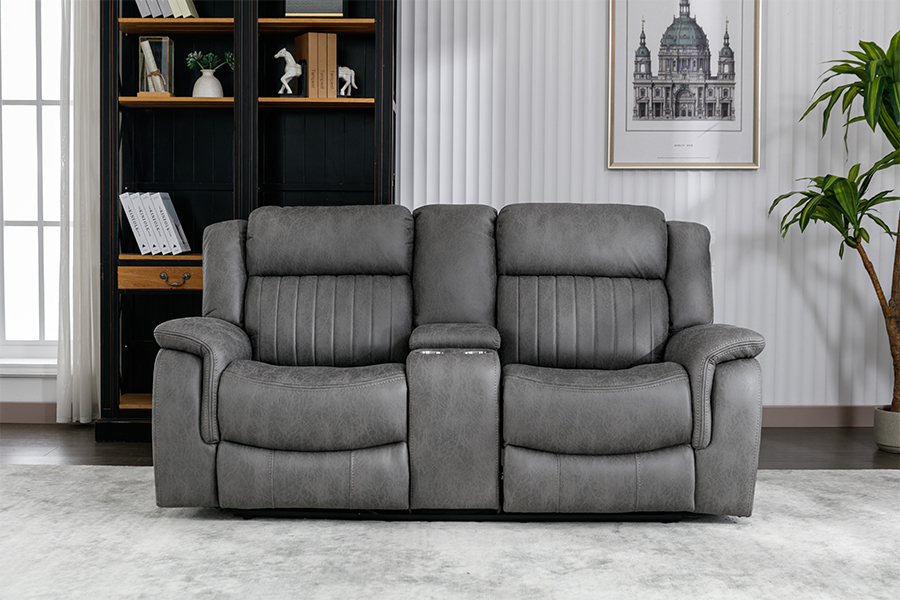
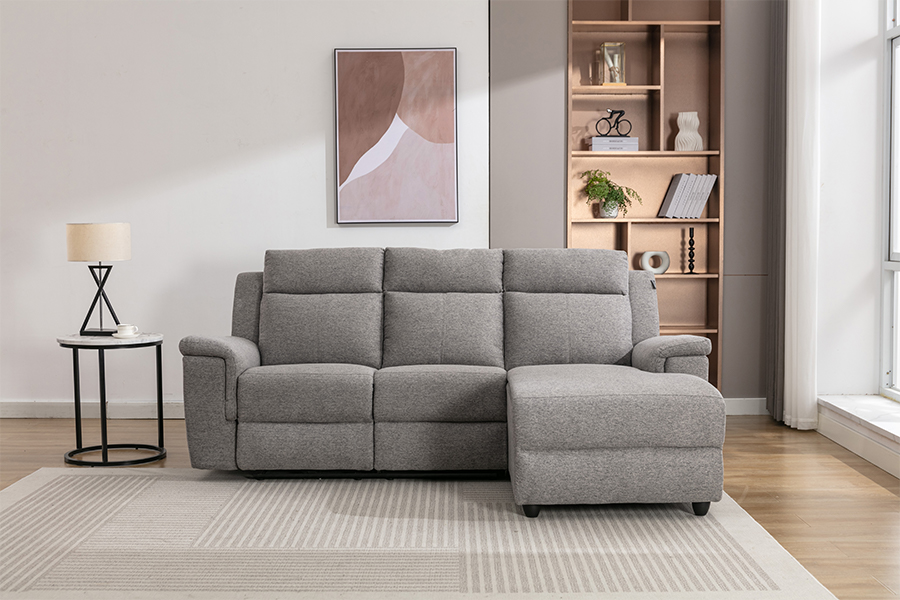
Not all reclining sectionals allow each seat to recline separately. Look for “independent reclining zones” – crucial for households where one person wants to recline while the other remains upright. Modular sectionals with individual mechanisms per seat provide maximum flexibility. Also verify wall‑hugger (zero clearance) design: this allows the sofa to recline fully while placed only 3–6 inches from the wall, saving floor space.
Standard reclining sectionals require 10–18 inches of clearance behind, limiting room arrangement. Zero‑clearance mechanisms shift the seat forward as the back reclines. Pro tip: Measure your available depth: a wall‑hugger needs 6–10" total clearance, making it ideal for apartments or tight living rooms.
Another layout feature is power headrests and power lumbar that adjust independently from the recline – great for watching TV or reading. While extra, they substantially increase ergonomic comfort.
7. Extra Features That Improve Daily Use
While optional, thoughtful extras elevate the user experience. Consider these high‑value additions if budget allows:
- Integrated USB‑A / USB‑C ports (2.1A minimum) – convenient for device charging; verify ports are well‑secured and accessible without lifting cushions.
- Hidden storage compartments under armrests or inside chaise – ideal for remotes, magazines, or blankets.
- Adjustable lumbar support (mechanical or power) to fine‑tune lower back pressure.
- Cup holders with cooling/heating – premium but practical for home theater sectionals.
- Drop‑down table or console with wireless charger – adds workstation utility.
Balance note: Each extra feature adds cost and potential maintenance. Prioritize durable mechanism and comfort first, then add smart features that align with your media habits.
8. Reclining Sectional Decision Flowchart
Follow this step‑by‑step framework to narrow down the perfect reclining sectional sofa for your home.
Final validation: Always sit on the showroom model (or read detailed reviews) to verify the reclining motion noise and footrest angle. Ask for the warranty coverage on the mechanism (minimum 3 years recommended).
9. Frequently Asked Questions (FAQ)
How much weight can a reclining sectional sofa support per seat?
Most quality reclining sectionals have a weight capacity ranging from 250 to 350 lbs per seat position. Heavier-duty models can support 400 lbs. Always check the manufacturer’s load rating, especially for the reclining mechanism.
What is “wall‑hugger” or “zero‑clearance” recline, and why does it matter?
Wall‑hugger technology allows the sofa to recline fully while positioned only 3–6 inches from the wall. It moves the seat cushion forward as the backrest tilts, saving floor space and preventing wall damage. Essential for compact rooms.
Are power reclining sectionals more prone to breakdowns than manual?
Not necessarily if well‑built. However, manual mechanisms contain fewer moving parts, so statistically they have a lower failure rate over 10+ years. Power motors are reliable for 5–10 years with proper use, but replacement may cost more. Choose power with at least 3‑year motor warranty.
How often should I maintain the reclining mechanism?
Apply silicone‑based lubricant to moving joints every 12–18 months to prevent squeaking. Tighten loose bolts when needed and avoid overloading the footrest. Also vacuum fabric and rotate cushions monthly to ensure even wear.
Can I replace the upholstery or cushions on a reclining sectional later?
Some brands offer replaceable cushion inserts, but upholstery replacement is difficult due to moving parts. For longevity, choose high‑durability fabric from the start. Many power sectionals have zippered cushion covers that can be professionally cleaned or replaced.



 طبقه 2 No.533 Shuangqiao Road ، خیابان Dipu ، شهرستان Anji ، شهر Huzhou ، استان ژجیانگ ، چین.
 Josie@boshenfurniture.com
 0086-15105823033